
Whoa! I logged into an OKX account the other day and felt that mix of excitement and mild dread you get before a big trade. My instinct said this was going to be smooth. But something felt off about the UI flow at first—tiny delays, a submenu hiding the futures settings. Hmm… okay, so check this out—if you trade on OKX or are thinking about futures or Web3 features, there are practical things traders miss. Short wins. Big traps. And a few tradecraft tips that actually save money and time.
At a glance, OKX is one of those platforms that tries to be everything: spot trading, perpetuals, options, staking, and a Web3 suite that links wallets and dApps. Really? Yes. It’s both an advanced exchange for active futures players and a gateway for people flirting with on-chain apps. Initially I thought it was simply another exchange, but then I realized the real differentiator is how they weave custodial trading with non-custodial Web3 tools—though actually there are gaps in the UX that matter under stress.
Here’s the practical breakdown: if you trade, protect, and plan like a desk trader, you sleep better. If you treat OKX like a casual app, you’re more at risk of slippage, margin calls, or wallet mistakes. I’ll be honest—some parts of the product bug me. For instance, futures leverage defaults and cross-margin settings are tucked in places you might overlook during a fast market move. That’s very very important to check before you hit the button.
Logging in, securing access, and where people trip up
Okay, quick reality check: 2FA is non-negotiable. Seriously? Yes. Use hardware keys where possible. Use unique passphrases. Keep email and phone verification tied to accounts you actually control. When I set up accounts for a group of traders, the ones who used hardware keys and separate device-managed authenticator apps made fewer mistakes—period. My biased view: security isn’t just a checkbox, it’s trade logic applied to operations.
If you want a central login reference for OKX account access, this is a practical starting point: https://sites.google.com/cryptowalletextensionus.com/okx-login-web/. Use it to confirm the official-looking flows, but verify domain and certificate details in your browser. Oh, and by the way… never reuse passwords across exchanges.
Here’s the thing. Trading isn’t only about the order. It’s about the setup before the order. Account permissions, API keys, withdrawal whitelist—those are the scaffolding. Set a withdrawal whitelist. Lock down API permissions to read-only if you’re doing analytics. If an algo needs to trade, give it minimal rights. These are small steps but they reduce catastrophic loss vectors.
On futures specifically, leverage is a weapon and a liability. High leverage amplifies tiny price moves. On the other hand, conservative leverage plus good position sizing lets you stay in the game longer. Initially I thought bigger leverage was the path to faster gains, but then I realized that staying solvent matters more—especially when funding rates spike and liquidations cascade. Also, check maintenance margin formulas; exchanges vary and fees can be surprisingly different when you add them up.
Perpetuals vs dated futures—know what you own. Perps have funding. Dated contracts settle. If you’re hedging or arbitraging, that distinction changes your roll strategy. Long-term holders should avoid perpetuals if they don’t want to eat funding fees on a trending market. On one hand, perps are great for short-term directional bets; on the other hand, if you’re not monitoring funding rates daily, you might slowly bleed capital.
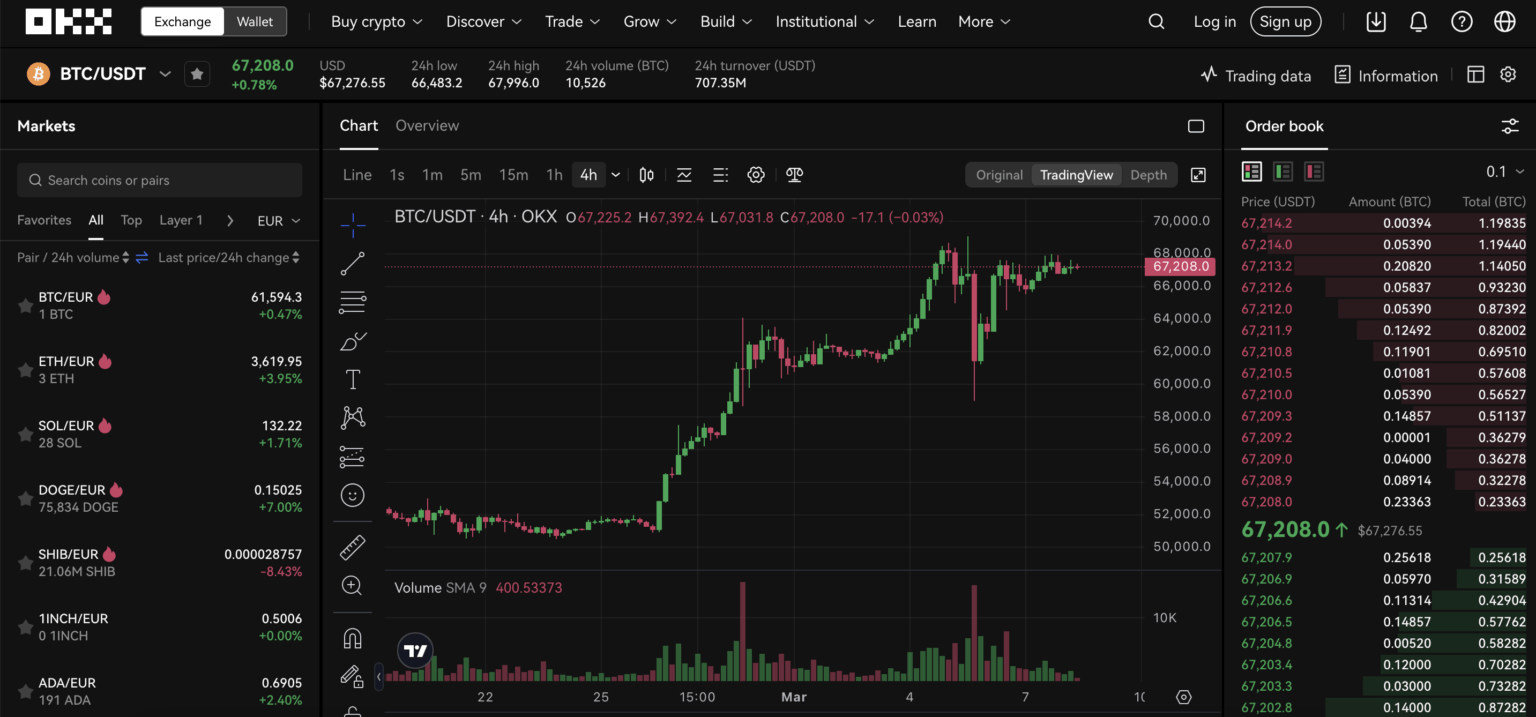
Trading interface tips: set preset order sizes in your workspace. Use OCO orders to manage upside and downside simultaneously. Use the BTC/USDT perpetual book to estimate cross-asset liquidity before placing a large order in an alt future. These are the small rituals pro traders do without thinking—until the market moves and you wish you’d done them.
Now, about Web3 on OKX. They’ve integrated a wallet flow and dApp browser. That’s neat for bridging between centralized liquidity and on-chain opportunities. But here’s a caveat: moving funds on-chain introduces tx costs and mempool timing risks. If you’re bridging into a DeFi farm during a volatility spike, slippage and failed transactions can cost you. My advice: batch non-urgent moves, use low-fee windows if possible, and simulate the bridge on test amounts first. Yeah, sounds tedious—but it’s how you avoid dumb losses.
On interoperability: OKX’s Web3 features can speed transfers between custodial and non-custodial environments, which is useful for arbitrage or moving collateral. However, it’s not a magic wand. Network congestion, token approvals, and smart contract quirks still apply. When I experimented with NFT drops and liquidity migration from an OKX wallet, the approvals step was the one that tripped me up—felt very manual and I nearly approved the wrong chain once.
Trade management techniques I use and recommend: diversify strategies across accounts (spot-only vs futures), keep a small contingency fund in a cold wallet, and document your API key lifecycle. Something else I do—somethin’ a little extra—I snapshot my position sizes and leverage in a simple spreadsheet before high-impact events. That habit saved me once when a sudden announcement spiked volatility and I needed to reduce exposure quickly.
Common questions traders ask
How should I set 2FA and withdrawal protections?
Use a hardware security key or an authenticator app for 2FA. Set withdrawal whitelist addresses and email confirmations. If possible, enable additional account verification layers and keep your recovery seeds in a secure offline place.
Are OKX futures good for hedging?
Yes, futures are useful for hedging, but match the contract type to your goals. Perpetuals are for short-term directional hedges; dated futures are better for locking a price over a fixed period. Adjust leverage conservatively and always account for fees.
Can I use OKX Web3 to move funds to DeFi?
Yes, but treat on-chain moves as separate operations: checks for gas, approvals, and slippage are crucial. Start with small test transfers and build confidence before scaling up.